

Google Business Profile: Advanced Strategy for Local Businesses
Unlock your Google Business Profile's potential to drive more calls and foot traffic. Advanced strategies and real-world case studies by Drylead.
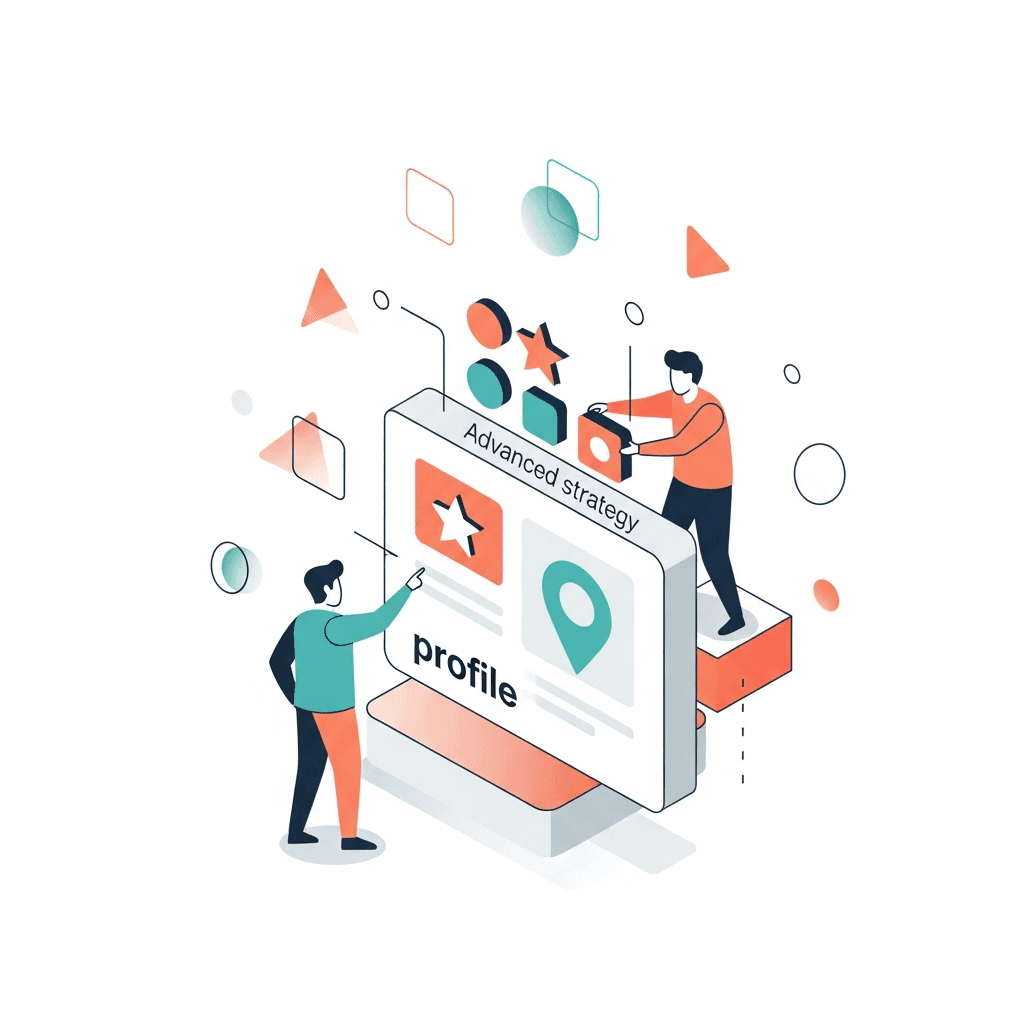
In brief: Google Business Profile is far more than a simple information listing. It's a strategic conversion tool that, when optimized with an advanced approach, can transform your local visibility into real appointments and sales. This article details how to leverage its features to outpace the competition.
Imagine a potential customer searching 'emergency plumber Lyon' on their phone. The top three listings that appear on Google Maps capture 80% of clicks. Is your business among them? For local businesses, this battle for immediate visibility now plays out on a free but underutilized tool: Google Business Profile.
In 2024, nearly 46% of Google searches have local intent, and this figure continues to grow with mobile usage. Yet our expertise at Drylead, built on supporting dozens of tradespeople and retailers, reveals a striking gap: the majority of profiles are incomplete or static, leaving enormous untapped potential. Your competition is no longer just the shop next door, but any well-optimized business within a 20 km radius.
In this article, we go beyond basic advice. You'll discover how to transform your GBP into a genuine local profit center through targeted content strategies, detailed insights analysis, and advanced reputation management techniques. We'll share concrete case studies from our client projects.
Why is an optimized Google listing your best digital salesperson?
Your Google Business Profile acts as a 24/7 salesperson. It answers questions, showcases your services, displays social proof (reviews), and guides customers toward action (call, directions, website). Optimizing it directly influences your ranking on Maps and in local search results.
For years, local businesses treated their Google listing as a simple online business card to fill out once and forget. This mindset is now outdated. At Drylead, we observe that Google's algorithms reward activity, relevance, and fresh information. Your GBP isn't a static database, but a dynamic communication channel with your potential customers.
Take the example of an auto repair shop we work with. By regularly publishing updates (Posts) on topics like 'Tire checks before winter' or 'Our new air conditioning service,' they saw a 30% increase in quote requests through their listing in three months. Each post is an opportunity to position yourself as an expert, promote an offer, and answer seasonal questions your customers are asking. It's an ongoing conversation with your market.
The most measurable impact lies in the listing's insights. This data reveals how customers find you (direct search, by category, or through generic keywords), what actions they take (visit website, request directions, call), and even what time of day. Analyzing these numbers is like listening to market conversations. It allows you to adjust your posted hours, enrich your description with the most-searched terms, and prioritize which services to highlight.
Key takeaways:
- Your GBP is an active channel, not a passive storefront. Its activity directly influences its ranking.
- Regular posts position your expertise and generate qualified leads.
- Insights are your strategic compass for understanding local customer behavior and optimizing accordingly.
In 2024, neglecting your Google Business Profile is like closing your shop during peak hours. It's a critical business touchpoint you must actively manage and continuously optimize.
How to turn customer reviews into a reliable growth engine?
Reviews aren't just a rating; they're social proof and an SEO signal. An advanced strategy involves soliciting detailed reviews, responding systematically to show your commitment, and analyzing their content to improve your service.
Review management too often becomes a race for star ratings. While the average matters, Google's algorithm and, more importantly, consumer psychology place equal or greater weight on quantity, freshness, and comment quality. A customer hesitating between two restaurants will be more reassured by a recent review detailing the atmosphere and service quality than by a 4.5 rating based on comments from two years ago.
Our approach at Drylead goes beyond simple solicitation. We help our clients implement a targeted collection process. For example, after completing a project for an electrician, we helped them send a personalized review request, highlighting a specific aspect ('How did you find the quote explanation?'). This generates rich, varied testimonials far more persuasive to future customers. Responding to reviews—both positive and negative—is non-negotiable. Responding to negative reviews professionally and constructively improves your brand image in the eyes of future readers and shows you take feedback seriously.
Finally, careful reading of reviews is a goldmine for your business strategy. Recurring mentions of a strength ('very punctual team') should be integrated into your description. Constructive criticism ('a bit of a wait on the phone') identifies operational improvements. Thus, your reviews become a customer listening tool and a means for continuous optimization of the experience you offer.
Key takeaways:
- Prioritize quality and freshness of detailed reviews over chasing a high average rating.
- Responding to all reviews demonstrates your customer commitment and improves your public image.
- Analyze review content to enrich your listing and identify service improvement opportunities.
A customer review is a public conversation. Your response is an opportunity to show hundreds of future customers how you treat people.
What are the advanced strategies to dominate local SEO with your listing?
To dominate local SEO, optimize your listing with rich semantics (services, description, questions/answers), use media (photos, videos) to prove your expertise, and ensure perfect consistency of your NAP (Name, Address, Phone) across the entire web.
At an advanced level, optimizing your Google Business Profile becomes a work of semantic precision and technical consistency. First, each section of your listing is a lexical field to exploit. The primary category should be as specific as possible ('Sushi restaurant,' not just 'Restaurant'). The services and products list should be comprehensive and incorporate local search keywords ('broken iPhone screen repair Paris 10th'). The 'About' or description section is your space to tell your story and naturally integrate your specialties.
Media is an underestimated lever. Professional photos regularly updated (interior, team, completed projects) significantly increase engagement rates. A short video presenting your premises or a business process adds a human and trustworthy dimension. Google interprets this media activity as a sign of vitality and relevance.
Finally, one of the most critical technical pillars is citation consistency. Your Name, Address, and Phone number (NAP) must be absolutely identical on your GBP, your website, and all online directories (PagesJaunes, sociétés.com, etc.). Inconsistencies create confusion for Google and can harm your ranking. Tools allow you to audit and correct these citations at scale. For one of our clients, systematically correcting their NAP across thirty platforms helped their listing rise into the 'local pack' (the top 3 results on the page) for several competitive searches.
Key takeaways:
- Work the semantics of each listing section (categories, services, description) with your customers' keywords.
- Quality photos and videos are strong signals of activity and trust for both Google and users.
- Perfect consistency of your contact information (NAP) across the entire web is an essential technical ranking factor for local search.
Local SEO is a trust puzzle. Each authentic review, each recent photo, each consistent piece of information is a piece that reassures both Google's algorithm and the customer hesitating to contact you.
Frequently asked questions
How long does it take to see results from GBP optimization?
Some effects, like improved listing completeness, are immediate. For impact on ranking in local results (Google Maps' 'local pack'), you typically need to allow 4 to 12 weeks of regular work (posts, review collection, media additions) to see significant improvements, depending on competition for your keywords.
Should I respond to all Google reviews, even positive ones?
Absolutely. Responding to positive reviews shows your gratitude and encourages other customers to leave reviews. Responding to negative reviews professionally demonstrates your commitment to customer service to all future readers. This transforms a potentially negative point into a demonstration of your responsiveness and professionalism.
Do GBP posts (Posts) have real SEO impact?
Posts don't directly influence keyword rankings like a website page would. Their impact is indirect but crucial: they increase user engagement (clicks, calls), signal an active listing to Google, and improve conversion rates. They're a marketing and direct communication tool that complements your SEO strategy.
How do I measure the ROI of my Google Business Profile?
Use your listing's 'Insights' to track user actions: number of phone calls generated, direction requests, website visits. Combine this data with tracking in your CRM or by asking at reception ('How did you find us?'). ROI is calculated by comparing the cost of your management time to the value of leads and customers acquired through this source.
Sparkavis is powered by Drylead, an SEO and web development agency.
Pour aller plus loin
Related articles
Simplified customer review collection: the 2026 method
Discover how to collect more Google reviews easily: QR codes, automation, and strategy for restaurants, hotels, and tradespeople. Take action with Sparkavis.
Collecting Google Reviews in 2026: The Sparkavis Method
Discover how to collect Google reviews effectively in 2026: QR codes, automation and Sparkavis strategy to boost your local visibility.
Managing Multiple Google Business Profiles in 2026: The Multi-Location Guide
Franchises and chains: centralize multi-location Google reviews, manage each Google Business Profile, and boost local reputation. 2026 guide + real cases.