

Multi-Location Review Management: Strategy for Chains and Franchises
Learn how to centralize and manage Google reviews across multiple locations. Concrete strategies for franchises and retail chains by Drylead.
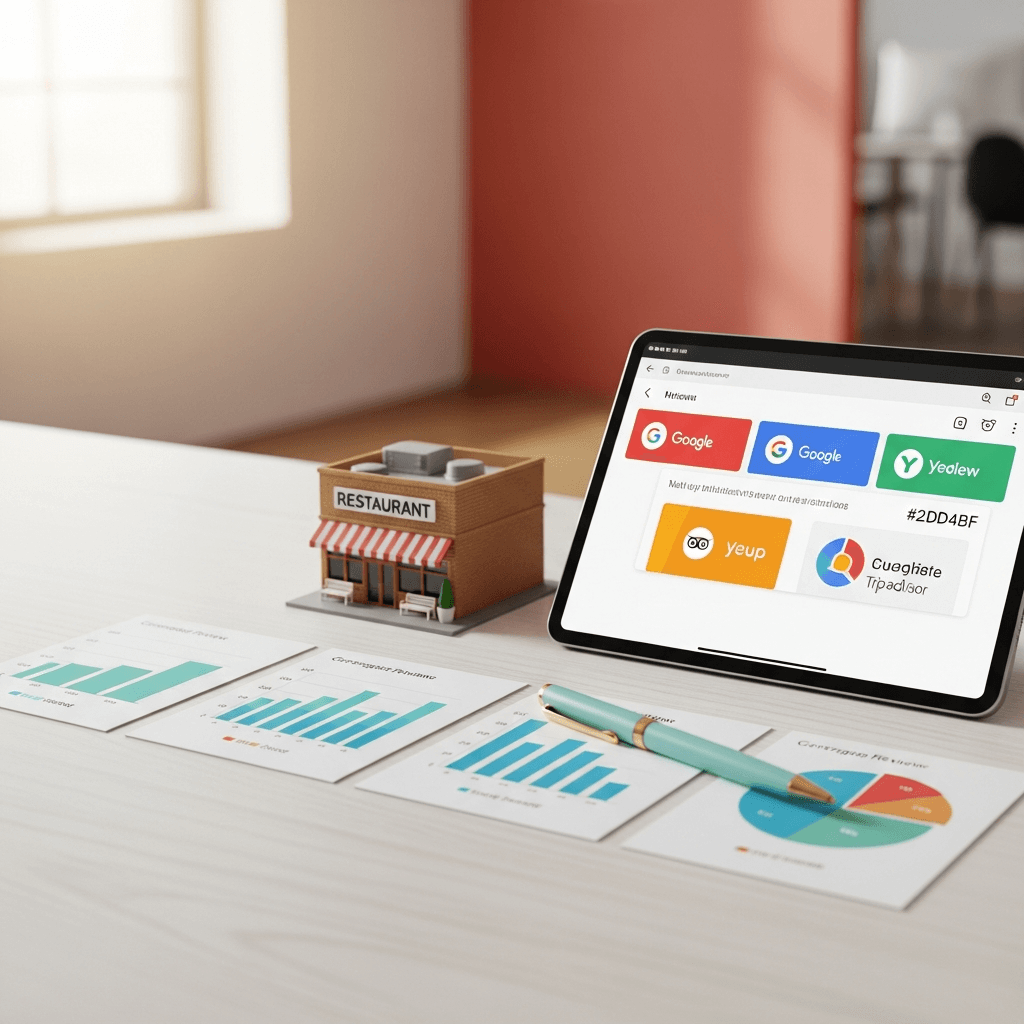
In brief: Managing Google reviews across multiple locations is a major challenge for franchises and retail chains. This article shows you how to centralize collection, standardize responses, and leverage each review to boost your local online reputation, with concrete insights from Drylead.
Picture this: you manage 15 franchise restaurants. Every week, dozens of Google reviews come in—some glowing, others more critical. How do you respond to all of them without burning the midnight oil, while keeping a consistent voice? It's the daily puzzle for many chain managers.
With 73% of Google searches having local intent, reviews have become the first filter for consumers. For a franchise or retail chain, each location is an independent storefront, but your brand image remains global. A negative review in Lyon can impact your reputation in Marseille. At Drylead, we've been supporting networks of 5 to 50 locations for 5 years, and we've found that review management is often the weak link in local SEO. Yet it's where customer trust is built.
In this article, you'll discover how to structure your multi-location review management: centralize without losing personalization, automate without sounding robotic, and turn every piece of feedback into a growth lever. We'll share real cases and figures from our experience at Drylead.
Why is multi-location review management a unique challenge?
Managing reviews across multiple locations means balancing brand consistency with local specifics. Each location has its own customer base, team, and challenges, but one misstep can damage the reputation of the entire network.
The main difficulty lies in the balance between standardization and personalization. Take the example of a bakery chain with 20 locations across the Île-de-France region. Each location has its own manager, its own team, and a different neighborhood clientele. A review about service in Paris 8th won't be handled the same way as a review about bread quality in Créteil. Yet the response must reflect the brand's values. Without a clear process, some reviews go unanswered, others are handled inconsistently, and the time spent explodes. At Drylead, we measured that unstructured networks take on average 3 times longer to respond to reviews, with a response rate below 40%. The result: a loss of visibility in local search results, because Google favors businesses that actively respond to reviews.
Key takeaways:
- Each location should maintain a local voice while respecting brand guidelines.
- A response rate below 60% hurts local SEO for each location.
- Without a centralized process, management time explodes and consistency fades.
At Drylead, we often say: 'An unmanaged review is a lost growth opportunity, but a poorly calibrated response is damaged reputation.'
How to centralize Google review collection across multiple locations?
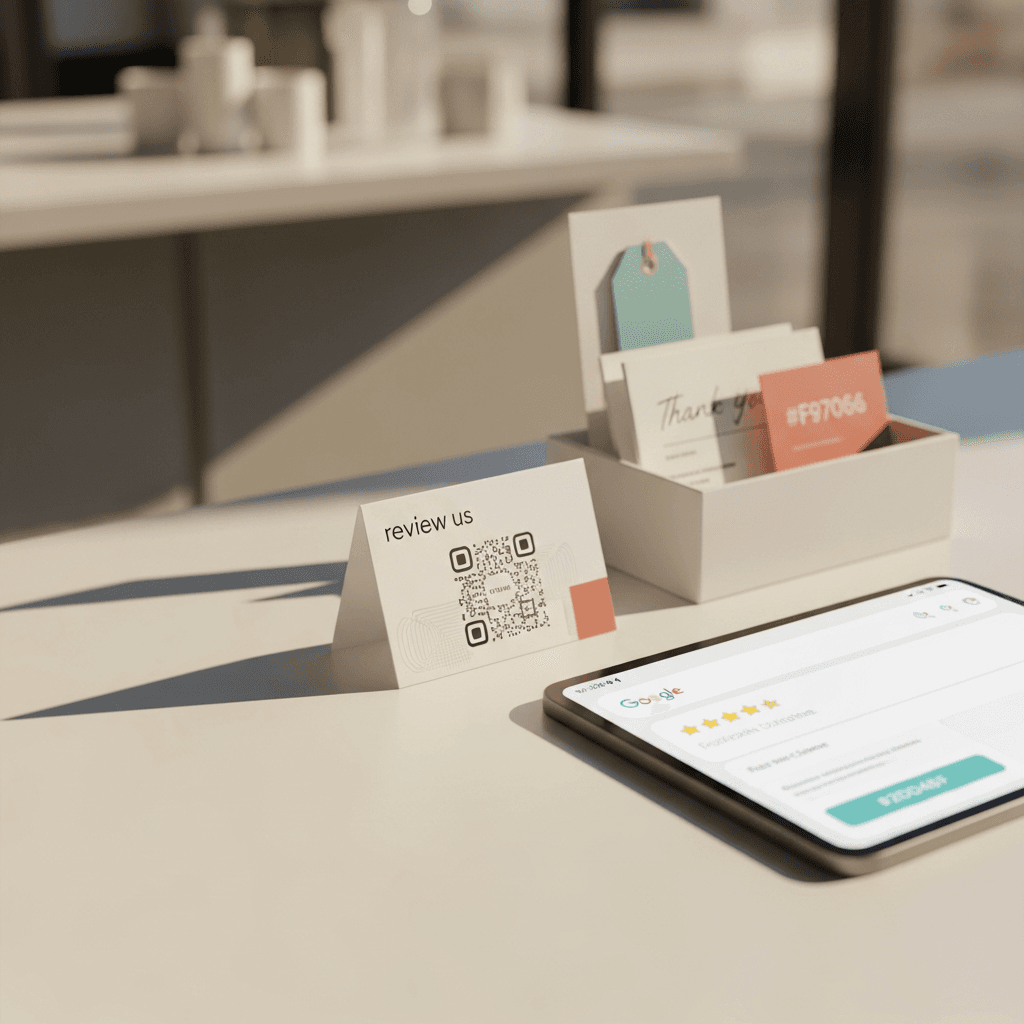
Centralize collection using a reputation management tool that aggregates reviews from all your locations. Create review request campaigns by location, with QR codes or personalized links, and track performance from a single dashboard.
The first step is to choose a platform capable of connecting all your Google Business Profile (GBP) accounts. Tools like ReviewTrackers, BirdEye, or BrightLocal allow you to centralize incoming reviews and sort them by location. But the crucial step is proactive collection. You can't wait for reviews to arrive passively. For each location, create a direct review request link (via the GBP short name) and integrate it into confirmation emails, receipts, or QR codes on tables. At Drylead, we recommend segmenting campaigns by location: a restaurant with high lunch traffic won't have the same request timing as a downtown boutique. Result: our franchised clients see a 30 to 40% increase in review volume within 3 months, with a response rate climbing to 85%.
Key takeaways:
- Use a reputation management tool to aggregate all your GBP profiles.
- Create location-specific collection campaigns (QR code, email, receipt).
- A centralized dashboard lets you compare performance across locations.
Centralizing isn't about uniformity. It's about giving each location the same tools to shine locally.
What response strategy should a restaurant chain adopt?
Adopt a two-tier response strategy: a brand-approved base template for positive reviews, and an escalation procedure for negative reviews. Each local manager can personalize the message, but values and tone remain consistent.
The most common mistake is trying to automate everything. Generic responses like 'Thank you for your review, we hope to see you again soon' are ineffective and feel cold. For a restaurant chain, we recommend creating a template library by review type: gratitude for positive reviews, response to service criticism, apology for quality issues. Each template includes variables like customer name, mentioned dish, or serving team. The local manager then has 2 minutes to personalize the response without starting from scratch. For negative reviews, an escalation process is essential: the manager responds within 24 hours, then a regional manager validates whether compensation is needed. At Drylead, we helped a 12-restaurant chain reduce its average response time from 4 days to 6 hours with this system, while increasing its average rating by 0.3 stars in 6 months.
Key takeaways:
- Create customizable templates by review type (positive, negative, neutral).
- Implement an escalation process for sensitive negative reviews.
- Fast response time (< 24h) improves rating and local SEO.
A well-designed template isn't a cage—it's a springboard for human, effective responses.
How to analyze reviews to improve each location's performance?
Analyze reviews by location and theme (service, quality, cleanliness) to identify weak points. Compare trends across locations and use insights to train teams and adjust operational processes.
Reviews aren't just a reputation indicator—they're valuable operational data. By analyzing them by category (using sentiment analysis tools or manual tags), you can identify patterns. For example, if three locations in the same region receive criticism about slow weekend service, that's a strong signal to review schedules or training. At Drylead, we help clients create a monthly dashboard that crosses ratings, review volume, and recurring themes. One of our clients, an 8-store clothing chain, discovered that reviews mentioning 'customer service' were 20% lower at locations with high staff turnover. By specifically training these teams, the average rating went from 4.1 to 4.5 in 4 months.
Key takeaways:
- Analyze reviews by theme to identify operational issues.
- Compare performance across locations to prioritize actions.
- Turn insights into training or continuous improvement plans.
Every review is a free satisfaction report. It's up to you to know how to read it.
Which tools should you prioritize for effective multi-location review management?
Prioritize tools like BirdEye, ReviewTrackers, or BrightLocal to centralize reviews, automate responses, and generate reports. For networks with 20+ locations, a solution with API and CRM integration is recommended.
Tool choice depends on your network size and budget. For a small chain of 5 to 10 locations, BrightLocal offers good value with monitoring and reporting features. For larger networks (20+ locations), BirdEye or ReviewTrackers enable finer management, with response workflows, real-time alerts, and CRM integrations. At Drylead, we always recommend testing the tool on a sample of 2-3 locations before rolling out network-wide. A key criterion: the ability to export data by location for comparative analysis. Avoid overly generic solutions that don't allow you to customize collection campaigns by location. With the right tool, our clients cut review management time by 50% while doubling their response rate.
Key takeaways:
- Choose a tool suited to your network size (BrightLocal for small, BirdEye for large).
- Test on 2-3 locations before full rollout.
- Prioritize solutions with API for CRM integration and location-based exports.
The best tool is the one your team actually uses. Simplicity beats sophistication.
Frequently asked questions
How long does it take to centralize reviews across multiple locations?
Setting up a centralized solution typically takes 2 to 4 weeks, including connecting GBP profiles, creating templates, and training local managers. At Drylead, we see visible results (increased review volume and response rate) within the first month.
Should you respond to all reviews, even negative ones?
Yes, absolutely. Google values businesses that respond to 100% of reviews. For negative reviews, a professional and empathetic response can defuse the situation and show your commitment. Never respond in the heat of the moment; use an escalation process if needed.
How do you prevent responses from being too generic?
Use templates with customizable variables (customer name, mentioned product, team). Train managers to add a personal touch in 2 minutes. The goal is to save time without losing authenticity.
What's the impact of reviews on a franchise's local SEO?
Reviews are a major ranking factor for local SEO. Google considers quantity, average rating, recency, and review diversity. A network that actively manages its reviews sees its locations better positioned in the local pack, with a 20 to 30% increase in organic traffic.
Can you automate responses to positive reviews?
Yes, partially. Some tools allow you to automate responses to 4-5 star reviews with a personalized template. But we recommend quick human review to avoid errors. For negative reviews, automation is discouraged: each response should be thoughtful.
How do you manage reviews across multiple platforms (Google, TripAdvisor, Yelp)?
Use a multi-platform tool like BirdEye or ReviewTrackers that centralizes reviews from Google, TripAdvisor, Yelp, and others. You can respond from a single dashboard while respecting each platform's specifics (e.g., public vs. private responses).
Sparkavis is powered by Drylead, an SEO and web development agency.
Pour aller plus loin
How does your Google listing actually score?
Get your 0-100 reputation score, projected rating and priority actions to boost your listing — in 30 seconds, no signup needed.
- 0-100 reputation score
- Rating projection based on your reviews
- Personalized action plan
Related articles

Local online reputation for small businesses: SME strategy 2026
Local online reputation: learn how to manage your online reputation, monitor customer reviews and protect your brand image in 2026.

Local business e-reputation: mastering your image in 2026
Learn how to manage your local e-reputation in 2026: sentiment analysis, Google monitoring and image protection. Expert guide for SMEs and craftspeople.
How to Collect Google Customer Reviews in 2026: 7 Strategies That Work
Discover how to collect Google customer reviews in 2026. Proven strategies to generate positive reviews and boost your local online reputation.