

How to Collect Google Customer Reviews in 2026: 7 Strategies That Work
Discover how to collect Google customer reviews in 2026. Proven strategies to generate positive reviews and boost your local online reputation.
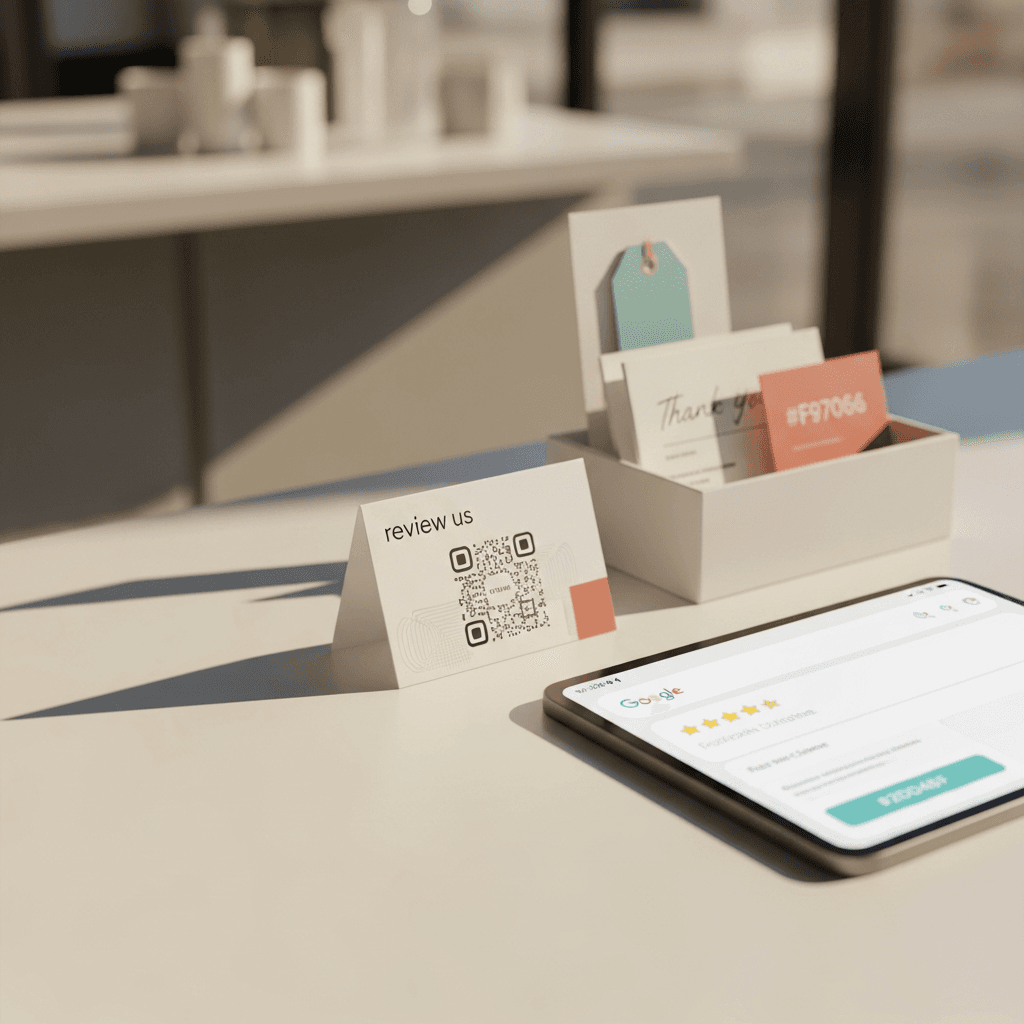
In brief: This article explains how to collect Google customer reviews in 2026. You'll discover 7 concrete strategies, real examples, and expert advice for generating positive reviews and improving your local visibility.
Did you know that 73% of French consumers read online reviews before choosing a local business? In 2026, this trend has only strengthened, and Google reviews have become a real game-changer for attracting new customers. Yet many retailers and craftspeople struggle to collect reviews, leaving their online reputation to chance.
At Drylead, we've been supporting local businesses with their online reputation strategy for 5 years. Our expertise across 50+ projects has shown us that review collection is often the weak link in local SEO. Yet it's a powerful lever: businesses with 50+ reviews receive an average of 30% more clicks on Google Maps. In 2026, Google's algorithms give reviews a prominent place in local rankings, and consumers are increasingly demanding.
In this article, I'll share 7 concrete and proven strategies to collect Google reviews systematically and legally. You'll discover how to turn satisfied customers into brand ambassadors and how to use tools like Sparkavis to simplify your daily operations.
Why is collecting Google reviews crucial for local businesses in 2026?
In 2026, Google reviews directly influence your ranking in local results, your click-through rate, and consumer trust. A business with recent, positive reviews attracts more customers and generates more revenue.
Imagine a potential customer looking for a restaurant in your neighborhood. They search 'best restaurant near me' on Google. What do they see? A list of restaurants, each with a star rating and reviews. In 2026, Google reviews have become the primary decision factor for 87% of consumers, according to recent research. They're even more influential than personal recommendations.
For local businesses, reviews aren't just a trust indicator—they're a major ranking factor in the local pack. Google favors establishments with recent, diverse, and quality reviews. Simply put, the more reviews you have, the more visible you are, and the more customers you attract.
At Drylead, we've found that a business with 30+ reviews receives an average of 2x more in-store visits than one with just 5 reviews. It's a virtuous cycle: reviews attract customers, who in turn leave reviews, strengthening your reputation.
But quantity isn't enough. The quality and consistency of reviews are equally important. A steady stream of positive reviews shows Google that your business is active and appreciated. That's why it's essential to implement a systematic review collection strategy.
Key takeaways:
- Google reviews are the primary decision factor for 87% of consumers in 2026.
- A business with 30+ reviews receives an average of 2x more visits than one with 5 reviews.
- Review consistency and quality matter more than raw quantity.
In 2026, local SEO is no longer optional—it's a strategic necessity. Google reviews are its cornerstone.
How to encourage customers to leave a Google review without being pushy?
To encourage customers to leave a review, ask at the right moment with a personalized approach. Use QR codes, follow-up emails, or SMS. The secret is making the action simple and showing that you value their feedback.
The first question every business owner asks is: how do I ask for a review without seeming pushy? The key is timing and personalization. The best moment to ask for a review is right after a positive experience, when the customer is still satisfied. For example, at a restaurant, it's after paying the bill; for a tradesperson, it's after completing a job.
An effective method is using QR codes placed on receipts, menus, or business cards. In 2026, scanning a QR code has become second nature to consumers. A simple scan and the customer lands directly on your Google Maps page, ready to leave a review. You can also embed a direct link in thank-you emails or follow-up SMS messages.
At Drylead, we recommend clients use a tool like Sparkavis, which generates personalized direct links and QR codes. This simplifies the process for customers and increases conversion rates. On average, our clients see a 40% increase in reviews within 3 months.
The important thing is never to force the issue. You can encourage, but you can't buy reviews, as this violates Google's policies. A gentle and respectful approach is always more effective in the long run.
Key takeaways:
- The best time to ask for a review is right after a positive experience.
- QR codes on receipts or menus make the process easier.
- A tool like Sparkavis can increase reviews by 40% in 3 months.
A satisfied customer is ready to leave a review—you just need to make it easy for them.
What tools and methods can automate review collection across multiple locations?
To automate review collection across multiple locations, use a centralized platform like Sparkavis that manages multiple Google Business profiles. It sends automatic invitations, tracks performance, and alerts you to negative reviews.
For restaurant chains, franchises, or businesses with multiple locations, collecting reviews becomes a logistical challenge. How do you track reviews from each location? How do you ensure every team solicits customers? This is where automation comes in.
Sparkavis, for example, lets you manage multiple Google Business profiles from a single dashboard. You can set up automatic invitation campaigns via email or SMS after a visit and customize messages for each location. Plus, the tool sends real-time notifications for negative reviews, allowing you to respond quickly and demonstrate your commitment.
Another advantage of automation is consistency. Instead of relying on your team's motivation, the system sends review requests systematically, ensuring a steady flow. At Drylead, we worked with a small bakery franchise that went from 10 reviews per month to 50 using Sparkavis. This significantly improved their local visibility.
However, automation doesn't replace human interaction. It's important to train your staff to ask for reviews in person, especially with loyal customers. Combine automation with a personalized approach for the best results.
Key takeaways:
- Sparkavis lets you manage multiple locations from a single dashboard.
- Automation ensures a consistent flow of review invitations.
- Combining automation with human interaction delivers the best results.
Automation doesn't replace people—it frees them to focus on customers.
How to respond to Google reviews to build trust and improve SEO?
Respond to every review, positive or negative, professionally and personally. Responses show you listen to customers and improve your image. Plus, Google rewards businesses that engage with their reviews.
Collecting reviews is a first step, but responding to them is equally important. In 2026, consumers expect businesses to react to their comments. According to research, 53% of customers expect a response within 7 days, and 44% are more likely to visit a business that responds to reviews.
Responding to positive reviews shows your gratitude and strengthens customer relationships. A simple personalized response using the customer's name and mentioning a detail from their experience is enough to build connection. For negative reviews, your response should be diplomatic, offer a solution, and invite the customer to discuss privately. This demonstrates professionalism and commitment to customer satisfaction.
From an SEO perspective, responding to reviews is beneficial because it adds fresh content to your Google Business profile. Keywords you use in your responses can also strengthen your relevance for certain searches. For example, if a customer mentions 'excellent plumbing service,' you can echo these terms in your reply.
At Drylead, we advise clients to dedicate time each week to responding to reviews. Use response templates, but always personalize them. With Sparkavis, you can even set up pre-written responses for common reviews, saving time while staying effective.
Key takeaways:
- Responding to reviews builds customer trust and improves your image.
- Responses add fresh content and keywords to your Google Business profile.
- Set aside time each week to respond to reviews, or use Sparkavis automation.
Every review is an opportunity to demonstrate your commitment to customers.
How to use QR codes to collect Google reviews in-store?
Place QR codes in strategic locations in your store, such as the checkout, counter, or tables. Customers scan the code and land directly on your review page. You can generate a personalized QR code with Sparkavis.
QR codes are a powerful tool for collecting in-store reviews. In 2026, scanning a QR code has become instinctive: 77% of consumers use their smartphones to scan them. For a local business, it's an opportunity to capture a review at the moment of experience, when satisfaction is at its peak.
To implement this strategy, you need to generate a QR code that points directly to your Google Business profile. Sparkavis lets you create personalized QR codes with your logo and an invitation message. You can print them on receipts, menus, business cards, or display them near the checkout.
Location is crucial. Place the QR code where customers wait, like in line or at a restaurant table. Here's a concrete example: a Paris café placed QR codes on coasters. Result: they collected 50 reviews in a month, compared to 10 before. Customers find it fun and quick.
Don't forget to pair the QR code with a short message: 'Your feedback matters to us. Scan to share your experience.' This prompts action. And to maximize results, train your staff to mention the QR code during checkout.
Key takeaways:
- QR codes make in-store review collection easy at the critical moment.
- Customize your QR codes with your logo and an invitation message.
- Place them in visible locations and train your team to promote them.
A well-placed QR code beats a lengthy request every time.
What mistakes should you avoid when collecting Google reviews?
Avoid buying reviews, creating fake reviews, asking for reviews aggressively, and ignoring negative reviews. These practices can result in Google penalties and damage your reputation.
Collecting Google reviews is subject to strict rules. In 2026, Google has tightened its controls and doesn't hesitate to penalize businesses that violate its guidelines. The first mistake to avoid is buying reviews or creating fake ones. Not only is it unethical, but it can result in your Google Business profile being removed or your ranking dropping.
Another mistake is asking for reviews intrusively or with financial incentives. For example, offering a discount in exchange for a positive review is prohibited. You can encourage, but you can't condition. Also, avoid asking unsatisfied customers for reviews when they're upset. Wait until they've had a chance to resolve their issue.
Ignoring negative reviews is also a mistake. Leaving them unanswered gives an impression of indifference. Instead, respond quickly and offer a solution. This shows you value feedback and want to improve your service.
Finally, avoid creating reviews from personal accounts or asking friends and family to leave reviews. Google detects these practices and considers them fraudulent. At Drylead, we've seen clients lose their Google Business profile because of this. The only sustainable method is collecting authentic reviews from real customers.
Key takeaways:
- Never buy reviews or create fake ones.
- Don't offer financial incentives in exchange for positive reviews.
- Respond to negative reviews and avoid soliciting friends and family.
Trust is earned through authentic reviews, not shortcuts.
How to measure the impact of your review strategy on your revenue?
Track the number of reviews, average rating, conversion rate from reviews to visits, and revenue attributable to local searches. Use tools like Google Analytics and Sparkavis to correlate data.
A review collection strategy only makes sense if it has a measurable impact on your business. In 2026, data is essential to justify your efforts. The first indicator is the number of reviews and average rating. But go further: measure click-through rates from Google Maps to your website, phone calls, or direction requests.
At Drylead, we use tools like Google Analytics and Google Business Profile to track these metrics. We've found that an increase of 10 reviews can lead to a 15% boost in foot traffic. For a restaurant, this can represent hundreds of euros in monthly revenue.
To correlate reviews and sales, you can set up promo codes specific to customers who mention seeing your reviews. Or ask customers how they found you. This data lets you calculate the return on investment of your strategy.
Sparkavis also provides detailed performance reports on your reviews, including breakdown by location, rating trends, and monthly review counts. This information helps you adjust your strategy and identify areas for improvement.
Key takeaways:
- Track the number of reviews, average rating, and traffic from Google.
- Correlate reviews with sales through promo codes or surveys.
- Use Sparkavis reports to refine your strategy.
What isn't measured can't be improved.
Frequently Asked Questions
How do I ask a customer for a Google review without being pushy?
Ask at the right moment, after a positive experience, with a personalized approach. Use a QR code on the receipt or send a thank-you email with a direct link. Show that you value their feedback and that it helps you improve your service.
What's the best time to ask a customer for a review?
The best time is right after a positive interaction, such as after a successful purchase, a satisfying meal, or completing a service. The customer is still riding the wave of satisfaction and will be more inclined to leave a review.
How do I create a QR code to collect Google reviews?
You can use a tool like Sparkavis, which generates a personalized QR code pointing to your Google Business profile. You can also use online QR code generators, but make sure they're reliable and the link is direct.
Is it legal to encourage customers to leave a Google review?
Yes, it's legal to encourage customers to leave a review, but you can't offer a reward in exchange for a positive review. This violates Google's policies. You can ask all customers to leave an honest review.
How do I handle negative reviews on Google?
Respond quickly and professionally, apologizing if necessary and offering a solution. Invite the customer to discuss privately to resolve the issue. Show that you value feedback. This builds trust with other customers.
What impact do Google reviews have on local SEO?
Google reviews are an important ranking factor for local SEO. More reviews and a higher rating improve your position in local search results and the Google Maps pack. They also increase click-through rates to your website.
Pour aller plus loin
Sparkavis is powered by Drylead, an SEO and web development agency.
How does your Google listing actually score?
Get your 0-100 reputation score, projected rating and priority actions to boost your listing — in 30 seconds, no signup needed.
- 0-100 reputation score
- Rating projection based on your reviews
- Personalized action plan
Related articles
Managing Multiple Google Business Profiles in 2026: The Multi-Location Guide
Franchises and chains: centralize multi-location Google reviews, manage each Google Business Profile, and boost local reputation. 2026 guide + real cases.

Local online reputation for small businesses: SME strategy 2026
Local online reputation: learn how to manage your online reputation, monitor customer reviews and protect your brand image in 2026.

Local business e-reputation: mastering your image in 2026
Learn how to manage your local e-reputation in 2026: sentiment analysis, Google monitoring and image protection. Expert guide for SMEs and craftspeople.