

Local SEO and Reviews: The Winning Combination for Your SMB in 2026
Discover how Google reviews and optimizing your Business Profile boost your local ranking. Expert tips from Drylead for 2026.

In brief: Local SEO increasingly relies on managing Google reviews. In 2026, SMBs that centralize and optimize their reviews gain local visibility. Discover how with practical advice and concrete data.
Did you know that 73% of Google searches in 2026 have local intent? For SMBs, that's a huge opportunity: capture customers at the exact moment they're looking for your services. But you need to be visible first.
Local SEO has evolved. Google now prioritizes complete Business Profile listings with recent reviews and regular interaction. At Drylead, we've been supporting SMBs for 5 years, and we've noticed that those who neglect their reviews drop in local rankings.
In this article, you'll understand why reviews have become a pillar of local SEO, how to optimize your Google Business Profile, and what concrete actions to take right now to dominate your geographic area.
Why Are Google Reviews Essential for Your Local SEO in 2026?
Google reviews directly influence local ranking through Google's algorithm. In 2026, the quantity, freshness, and diversity of reviews are trust and relevance signals for the search engine.
Google's Business Profile algorithm has integrated reviews as a major quality signal. In 2026, a listing with regular reviews (at least one per week) and a high average rating (4.0+) gets better positioning in the local pack. But be careful: freshness matters as much as the rating. A recent review carries more weight than an old one. Take the example of a restaurant in Lyon: one that has 150 reviews but whose last one is from 3 months ago will be outranked by a competitor with 80 reviews but a steady stream of weekly reviews. Google interprets this activity as a sign of relevance and customer engagement.
At Drylead, we observed across 50+ client projects that businesses responding to 100% of their reviews (positive and negative) see their local traffic increase by 20 to 30% in six months. Why? Because responding shows you're active and care about customer experience. Plus, the keywords you use in your responses can strengthen your relevance for specific searches. For example, a hairdresser who responds "Thank you for your loyalty! We're thrilled our men's haircut in Paris 11 pleased you" naturally incorporates geo-targeted and service-related terms.
Finally, review diversity is an underestimated factor. Google values reviews that mention varied aspects of your offering: quality, welcome, speed, cleanliness. Encourage your customers to be specific. A review like "Great team, fast service, I recommend" is less powerful than one detailing a specific experience. The algorithm analyzes text content to assess your establishment's relevance to a query.
Key takeaways:
- Recent and regular reviews are more important than total review count.
- Responding to all reviews improves your engagement and local SEO.
- Encourage detailed reviews to strengthen your semantic relevance.
In 2026, a well-managed customer review is as strategic as a quality backlink for your local visibility.
How to Optimize Your Google Business Profile for Local Ranking?
To optimize your Google Business Profile in 2026, complete all information (hours, services, photos), choose the right categories, and publish Google posts regularly. Reviews and responses are also essential.
Your Google Business Profile is the gateway to your local visibility. In 2026, Google places growing importance on information completeness and updates. Start by verifying that your name, address, and phone number (NAP) are consistent across all directories. Even a minor inconsistency can penalize your ranking. Next, select your primary and secondary categories carefully. For example, a dental practice should choose "Dentist" as the primary category, but also "Dental Surgeon" or "Orthodontist" if relevant. These categories help Google understand your business precisely.
Photos also play a crucial role. Listings with more than 100 photos receive 520% more clicks to the website, according to Google's internal data. But quality trumps quantity. Professional photos of your establishment, products, and team build trust. Add captions with local keywords, like "Our hair salon in downtown Bordeaux". At Drylead, we recommend publishing at least one photo per week to signal to Google that your listing is active.
Finally, Google Posts are an underutilized lever. Publish special offers, events, or news each week. These posts appear on your listing and can include links, call-to-action buttons, and even videos. They boost engagement and signal to Google that your business is dynamic. A well-written post with a local keyword (e.g., "Discover our new winter menu in Lille") can boost your relevance for that search.
Key takeaways:
- Ensure NAP consistency across all online directories.
- Publish photos and Google Posts regularly to signal your activity.
- Choose precise categories to improve your listing's relevance.
A complete and active Google Business Profile is the best local SEO investment for an SMB.
What Strategies to Get More Customer Reviews and Improve Your Local SEO?
To get more reviews in 2026, simplify the process by sending a direct link via SMS or email after a purchase, and train your team to ask for reviews at the right time. Deliver exceptional service to generate positive reviews organically.
Getting reviews isn't always easy, but it's essential. The key is making the process simple and timely. After a purchase or service, send an SMS or email with a direct link to your Google listing. At Drylead, we use tools that automate this follow-up 24 hours after the interaction. The response rate is then 3 times higher than a generic request. Personalize the message: "Thank you for visiting [Business Name]! We'd love to hear your feedback. Click here: [link]".
Train your team to ask for reviews at the right moment. For example, after positive customer feedback, or just after resolving an issue. Timing is crucial: asking too soon can seem pushy, too late and the customer has forgotten. Ideally, within 24 to 48 hours of the experience. Avoid incentivizing positive reviews (Google prohibits exchanging goods for reviews), but you can remind them of the importance of their feedback.
Finally, manage negative reviews professionally. Respond quickly, apologize if necessary, and offer a solution offline. A well-handled negative review can become an asset: it shows your responsiveness and customer care. Plus, Google values listings that respond to all reviews, including negative ones. In 2026, a listing with 95% positive reviews but no responses to negatives will rank lower than one with 90% positive reviews but responses to each review.
Key takeaways:
- Automate review requests via SMS or email 24 hours after interaction.
- Train your team to ask for reviews at the right time, without incentives.
- Respond to all reviews, especially negative ones, to show your commitment.
A well-handled negative review is often more powerful than a positive review left unaddressed.
How to Centralize and Analyze Your Reviews to Maximize Their SEO Impact?
Centralize your reviews via a single dashboard to track trends, respond quickly, and identify improvement areas. Analyze recurring keywords in reviews to optimize your content and Google listing.
If you manage multiple locations or just one listing, centralizing your reviews saves time and improves efficiency. A single dashboard lets you see at a glance your average rating, number of reviews per month, and trends. At Drylead, we use tools like Sparkavis (our solution) to centralize Google reviews and other platforms. This allows for quick responses, as response speed is a ranking factor. Google measures average response time to reviews; a response time under 24 hours is optimal.
Analyzing reviews is equally important. Extract recurring keywords: "warm welcome", "fast service", "quality products". These terms can be integrated into your web content, Google descriptions, and even your posts. For example, if multiple reviews mention "easy parking", add this information to your listing. This strengthens your relevance for searches including "parking". Plus, negative reviews reveal weak points to fix. A customer complaining about wait times can push you to optimize your process, improving both customer experience and future reviews.
Finally, use review data to adjust your marketing strategy. If you notice reviews mentioning a specific service (e.g., "fast delivery") increasing, highlight this service in your local ads. Reviews are a goldmine of information about what your customers value. In 2026, businesses that leverage this data gain a clear competitive advantage.
Key takeaways:
- Use a dashboard to centralize and respond quickly to reviews.
- Analyze review keywords to optimize your listing and website.
- Exploit review trends to adjust your offering and marketing.
Customer reviews reflect your actual performance; ignoring them means neglecting a source of strategic data.
Frequently Asked Questions
How many Google reviews do I need to rank well locally in 2026?
There's no magic number, but aim for at least 30 to 50 reviews with a 4.0+ rating. What matters is consistency: get at least 2 to 3 new reviews per week to signal to Google that your business is active and relevant.
Do negative reviews hurt my local SEO?
Not necessarily. Google considers average rating, but also review diversity. A negative review can be offset by several positive ones. The key is responding professionally. A listing with responses to all reviews ranks better than one without responses.
Can I delete negative Google reviews?
You can't delete a review that complies with Google's policies. However, you can report an inappropriate review (fake, hateful, spam). Google examines each report. For legitimate negative reviews, the best approach is to respond and resolve the issue.
What are the key local SEO factors in 2026?
The main factors are: Google Business Profile completeness, NAP consistency, review quantity and freshness, review responses, regular photos and posts, and local citations (directories). Trust signals like reviews have become paramount.
How do I get Google reviews without breaking the rules?
Never offer a reward in exchange for a review. Instead, use natural reminders: after a purchase, send a direct link to your listing with a thank-you message. You can also display a QR code in your establishment. The key is simplifying the process for the customer.
Do Google reviews influence voice search ranking?
Yes, indirectly. Local voice searches rely on the local pack, which is influenced by reviews. A well-rated and active listing is more likely to be selected by a voice assistant. Plus, natural phrases in reviews (e.g., "the best coffee in the neighborhood") can match voice search queries.
Pour aller plus loin
Sparkavis is powered by Drylead, an SEO and web development agency.
Related articles
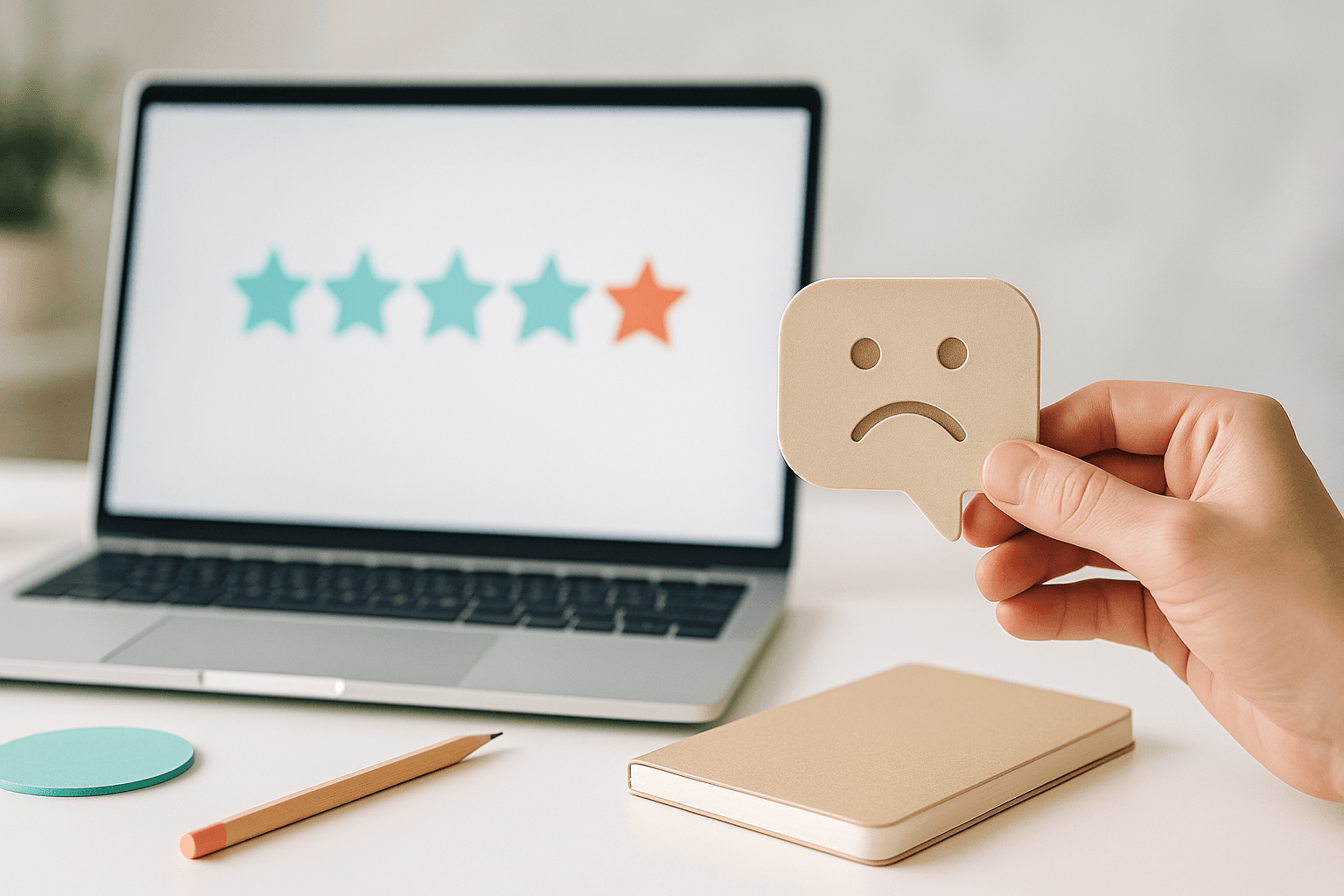
Responding to Negative Google Reviews: 7 Winning Strategies in 2026
Learn how to manage negative Google reviews with effective techniques. Protect your online reputation and boost your local SEO in 2026.

Respond Quickly to Google Reviews: What Responsiveness Brings in 2026
Why respond fast to Google reviews, and how to automate your responses with Sparkavis on your timeline, without losing control of sensitive reviews.

Simplified customer review collection: the 2026 method
Discover how to collect more Google reviews easily: QR codes, automation, and strategy for restaurants, hotels, and tradespeople. Take action with Sparkavis.