

Multi-location management: centralize your Google reviews in 2026
Learn how to centralize Google review management across multiple locations. Strategies, tools and best practices for chains and franchises in 2026.
In brief: Managing Google reviews for multiple locations is a growing challenge. This article explains how to centralize, delegate and optimize your multi-site reputation with tools like Sparkavis, clear processes and a global strategy.
In 2026, 76% of consumers check Google reviews before visiting a local business. For a chain of 10 stores, that means 10 profiles to monitor, 10 times more responses to manage, and an increased risk of inconsistency.
Chain managers and franchisees face a significant challenge: how do you maintain a consistent reputation while allowing local autonomy? At Drylead, we work with networks of 5 to 50 locations and find that without a centralized tool, review management quickly becomes unmanageable. Neglected reviews or inconsistent responses damage customer trust.
In this article, we explain how to structure your multi-location management, the best practices to adopt, and how a tool like Sparkavis can revolutionize your approach. You'll leave with a clear roadmap for 2026.
Why is Google review management such a headache for chains in 2026?
The proliferation of Google profiles, the diversity of local teams, and lack of overall visibility make review management complex. Without centralization, responses are inconsistent and negative trends go unnoticed.
Imagine: you manage 15 stores across France. Each location has its own Google My Business profile, its own reviews, and its own teams. Without a centralized tool, you must log into each account individually, spot urgent reviews, and hope your local managers respond appropriately. Result: longer response times, inconsistent tone from store to store, and negative reviews left unanswered for days.
This problem gets worse over time. Google favors businesses that respond quickly and regularly to reviews. Lack of responsiveness directly impacts your local ranking. Plus, customers often compare reviews across your locations: a glaring disparity can damage your overall brand image.
At Drylead, we've seen chains lose up to 20% of their local traffic due to poor review management. Fortunately, solutions exist to regain control.
Key takeaways:
- Without centralization, average response time increases and hurts local SEO.
- Inconsistent responses between locations weakens the brand.
- Proactive review management can increase local traffic by 15 to 25%.
At Drylead, we've seen chains lose up to 20% of their local traffic due to poor review management.
How to centralize review management across your multiple locations?
Use a platform like Sparkavis that aggregates all your Google profiles in a single dashboard. Set response templates, assign roles, and track overall performance in real time.
The first step is to adopt a centralized management tool. Sparkavis, for example, lets you connect all your Google My Business profiles to a single dashboard. You see at a glance the number of reviews per location, average ratings, and reviews requiring urgent response. No more switching between accounts.
Next, implement standardized processes. Create response templates for common situations: thank yous, apologies, invitations to return. But leave room for local personalization so each response sounds authentic. With Sparkavis, you can even assign automatic responses to positive reviews, freeing up time for more complex replies.
Finally, train your local teams on the importance of reviews. Give them clear objectives: respond within 24 hours, systematically thank positive reviews, and escalate negative reviews to headquarters. At Drylead, we recommend a monthly performance audit by location to identify areas for improvement.
Key takeaways:
- A centralized tool like Sparkavis reduces management time by 60%.
- Standardized response templates ensure consistent tone.
- Training local teams on review management is essential for responsiveness.
With Sparkavis, we've reduced review management time by 60% for our franchised clients.
What best practices should you adopt for consistent multi-site reputation?
Define an editorial charter for responses, centralize alerts for negative reviews, and analyze global trends. Encourage positive reviews through local campaigns and reward high-performing teams.
Consistent reputation starts with a clear editorial charter. Define the tone to adopt: professional yet warm, with standardized courtesy phrases. Explain how to handle constructive criticism versus unjustified attacks. This charter should be accessible to all managers.
Next, set up an alert system for negative reviews. With Sparkavis, you can configure real-time notifications for any review below 3 stars. This way, headquarters can intervene quickly if needed. For very negative reviews, a personalized response from the local manager, validated by headquarters, is often more effective.
Finally, analyze trends globally. What are recurring strengths? Common weaknesses? Use this data to improve your processes. For example, if multiple stores receive reviews about slow service, launch customer service training across the chain. At Drylead, we helped a restaurant chain increase its average rating from 3.8 to 4.3 in 6 months through this type of analysis.
Key takeaways:
- An editorial charter ensures a unified brand voice.
- Real-time alerts enable quick reaction to negative reviews.
- Global trend analysis guides operational improvements.
At Drylead, we helped a restaurant chain increase its average rating from 3.8 to 4.3 in 6 months through centralized review analysis.
How does Sparkavis simplify review management for franchises?
Sparkavis aggregates all your Google profiles, offers response templates, customizable alerts and performance reports. It lets you delegate responses to local teams while maintaining centralized control.
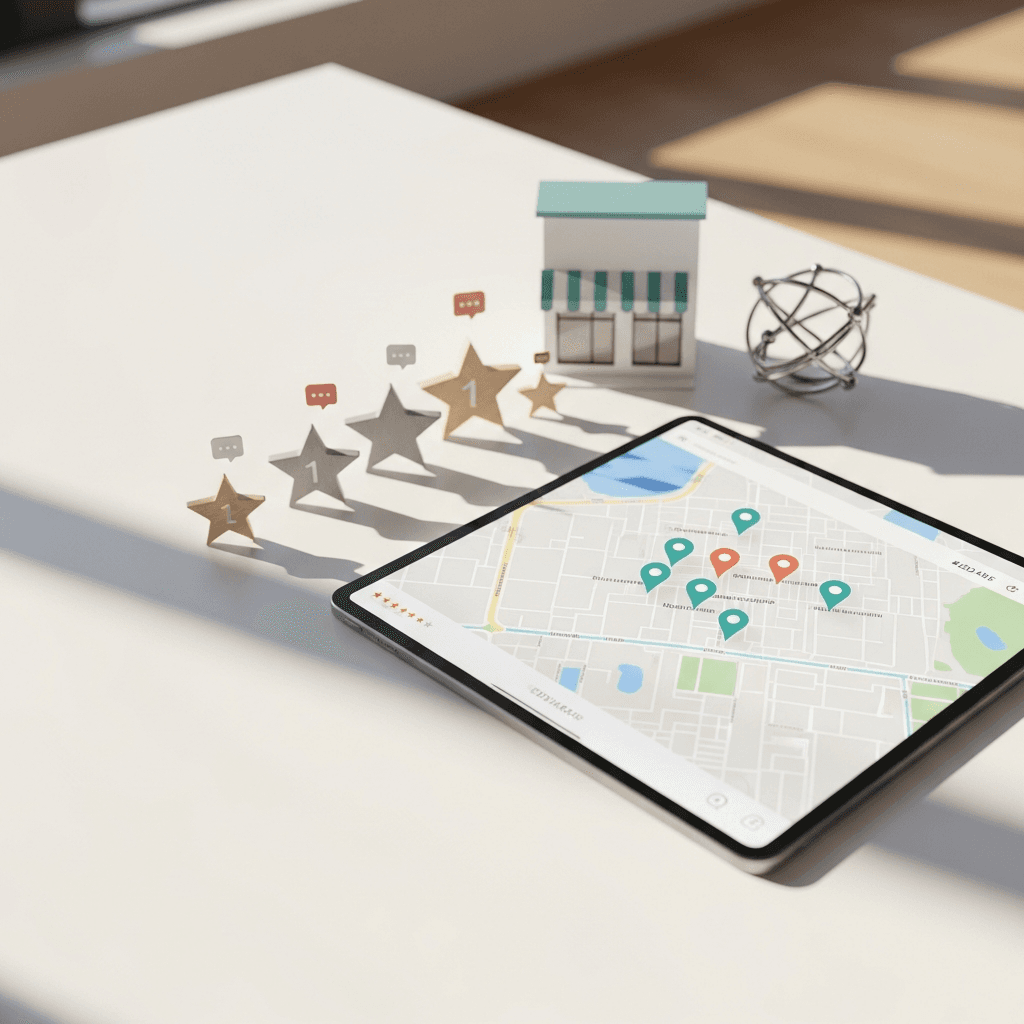
Sparkavis was designed to meet the specific needs of chains and franchises. Its centralized dashboard displays all your locations on an interactive map. You can filter by rating, number of reviews, or date of last review. Each profile is accessible with one click.
The tool offers advanced features like batch responses: select multiple positive reviews and reply with a customized template in a single click. For negative reviews, you can mark them as 'to handle' and assign them to a specific manager. Sparkavis then sends an automatic notification.
Performance reports are a major asset. You get graphs comparing your locations, rating trends, and average response time. This data is essential for your management meetings. At Drylead, we use Sparkavis for our clients and see an average 35% improvement in response time in the first month.
Key takeaways:
- Sparkavis provides a real-time overview of all your locations.
- The batch response feature saves valuable time.
- Performance reports make reputation management easier.
With Sparkavis, our clients improve their response time by 35% on average in the first month.
Frequently asked questions
What's the best tool for managing Google reviews across multiple locations?
Sparkavis is one of the best tools for centralizing Google review management across multiple locations. It offers a single dashboard, response templates, alerts and performance reports. Other options include BirdEye or Reputation.com, but Sparkavis stands out for its simplicity and focus on franchises.
How can I centralize Google reviews for my stores without a paid tool?
Without a paid tool, you can create a shared dashboard (Google Sheets) to track reviews manually, but this quickly becomes time-consuming. You can also connect each profile to Google Alerts to be notified of new reviews. However, for effective management, a dedicated tool like Sparkavis is highly recommended.
What's the ideal response time for Google reviews in 2026?
The ideal response time is under 24 hours. Google favors businesses that respond quickly, which improves local ranking. For negative reviews, a response within 12 hours is recommended to show your responsiveness and customer care.
How can I encourage customers to leave Google reviews at all my locations?
Implement a systematic process: after a purchase or service, send a thank-you email or SMS with a direct link to your Google profile. You can also display a QR code at checkout. For franchises, centralize these campaigns via Sparkavis to track results by location.
What are the risks of not managing reviews across multiple locations?
Risks include a drop in local ranking due to lack of responses, inconsistent reputation across locations, and loss of customer trust. Unaddressed negative reviews can spread and damage your overall brand image.
How do I train my local teams on review management?
Create a best practices guide including tone to adopt, response deadlines, and procedures for negative reviews. Organize an online training session with concrete examples. Use Sparkavis to track each team's performance and provide regular feedback.
Pour aller plus loin
Sparkavis is powered by Drylead, an SEO and web development agency.
Related articles

Simplified customer review collection: the 2026 method
Discover how to collect more Google reviews easily: QR codes, automation, and strategy for restaurants, hotels, and tradespeople. Take action with Sparkavis.

Collecting Google Reviews in 2026: The Sparkavis Method
Discover how to collect Google reviews effectively in 2026: QR codes, automation and Sparkavis strategy to boost your local visibility.

Managing Multiple Google Business Profiles in 2026: The Multi-Location Guide
Franchises and chains: centralize multi-location Google reviews, manage each Google Business Profile, and boost local reputation. 2026 guide + real cases.